Heavy-duty towing and recovery, day or night
When the truck won't move under its own power, one call brings the wrecker. Tell dispatch where you are and what you're driving, and you'll get a straight answer about whether we can get to you.
What we tow
Heavy-duty towing: tractors, trailers and the combinations in between. Tell dispatch what you're driving and whether it's loaded, and you'll get a straight answer.
Towing lines
- Tractor-trailers and heavy trucks
- Trailers, with or without the tractor
- Disabled and abandoned units
Recovery
Recovery is the part of the job that starts before the tow: a rig on its side, a set jackknifed across the shoulder, drive tires buried in a soft shoulder. Winch-outs, rollovers, jackknifes and off-road recovery from mud, ditches and soft ground are the calls that come in. Describe how the unit sits and dispatch will tell you what can be done.
Recovery lines
- Winch-outs
- Rollovers
- Jackknifes
- Soft shoulder, mud and ditch recovery
Abandoned-unit recovery
A unit left on the shoulder, in a lot or in a yard can be recovered and moved. Call with where it is and who owns it, and dispatch will tell you what's needed before it's released.
Load shifts and transfers
A shifted load can be reset, or transferred to another trailer, so the run can continue. Dry load storage and yard storage are offered alongside it; ask dispatch about terms.
What happens when you call
- You call 706-996-5435 and tell dispatch where you are: interstate and direction, the last exit or mile marker you passed, what you're driving, and what happened.
- Dispatch tells you straight whether we can get to you and what happens next. No promises we can't keep.
- Keep your phone on. Dispatch may call back for details on the unit or the load.
- On scene, the operator sizes up the job before anything is hooked up. Where the unit goes is settled with you before it moves.
Coverage
Mobile units and wreckers cover approximately 50 miles from Tunnel Hill. Not sure we cover your location? Call and ask.
What to have ready when you call
- Interstate and direction, and the last exit or mile marker you passed
- What you're driving: tractor, trailer, loaded or empty, and roughly what it weighs if you know
- What happened: won't move, rolled, jackknifed, off the road
- Whether anyone is hurt or the road is blocked, so dispatch knows what to send
- A phone number that will answer
Photos
Each caption says only what the photo shows.
-
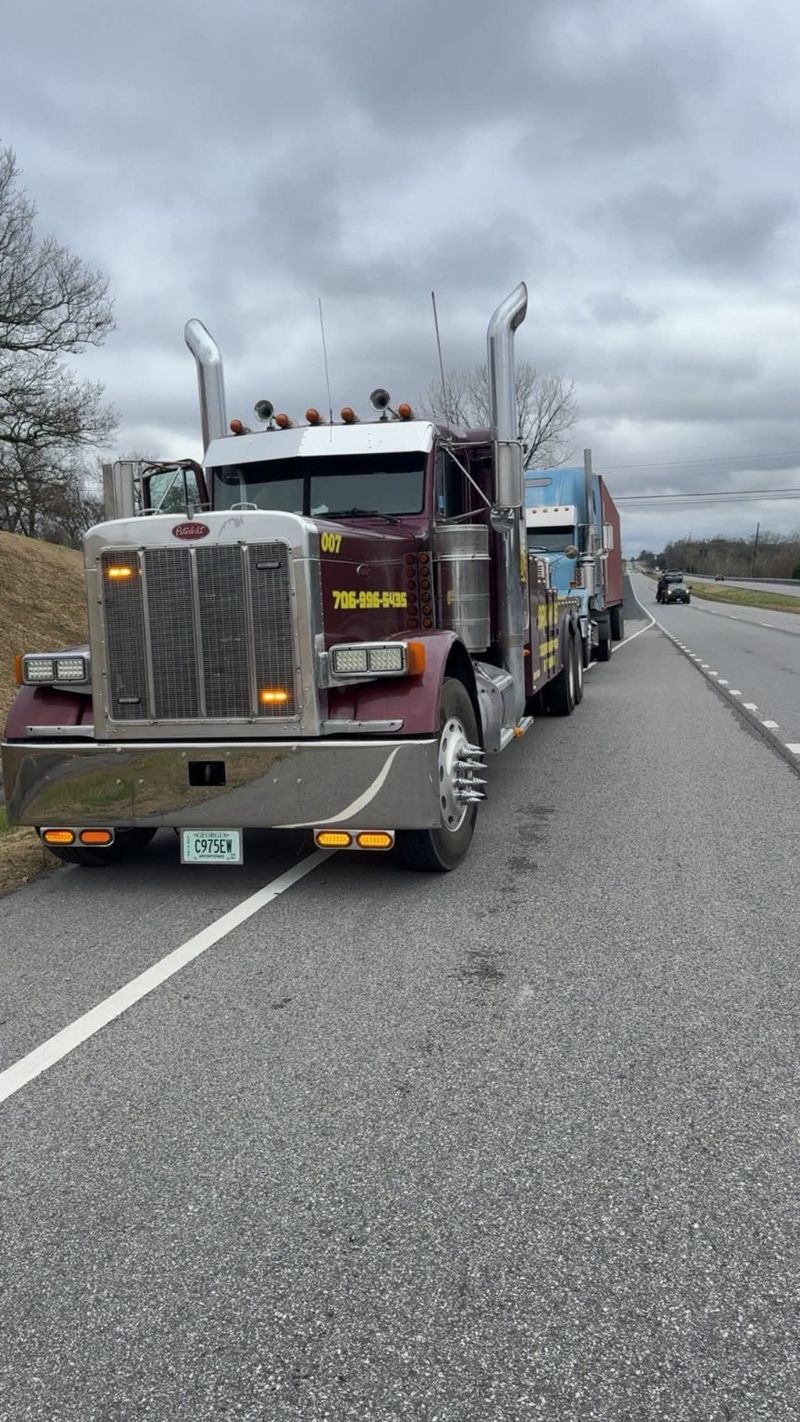
The heavy wrecker on the shoulder with a semi behind it. -
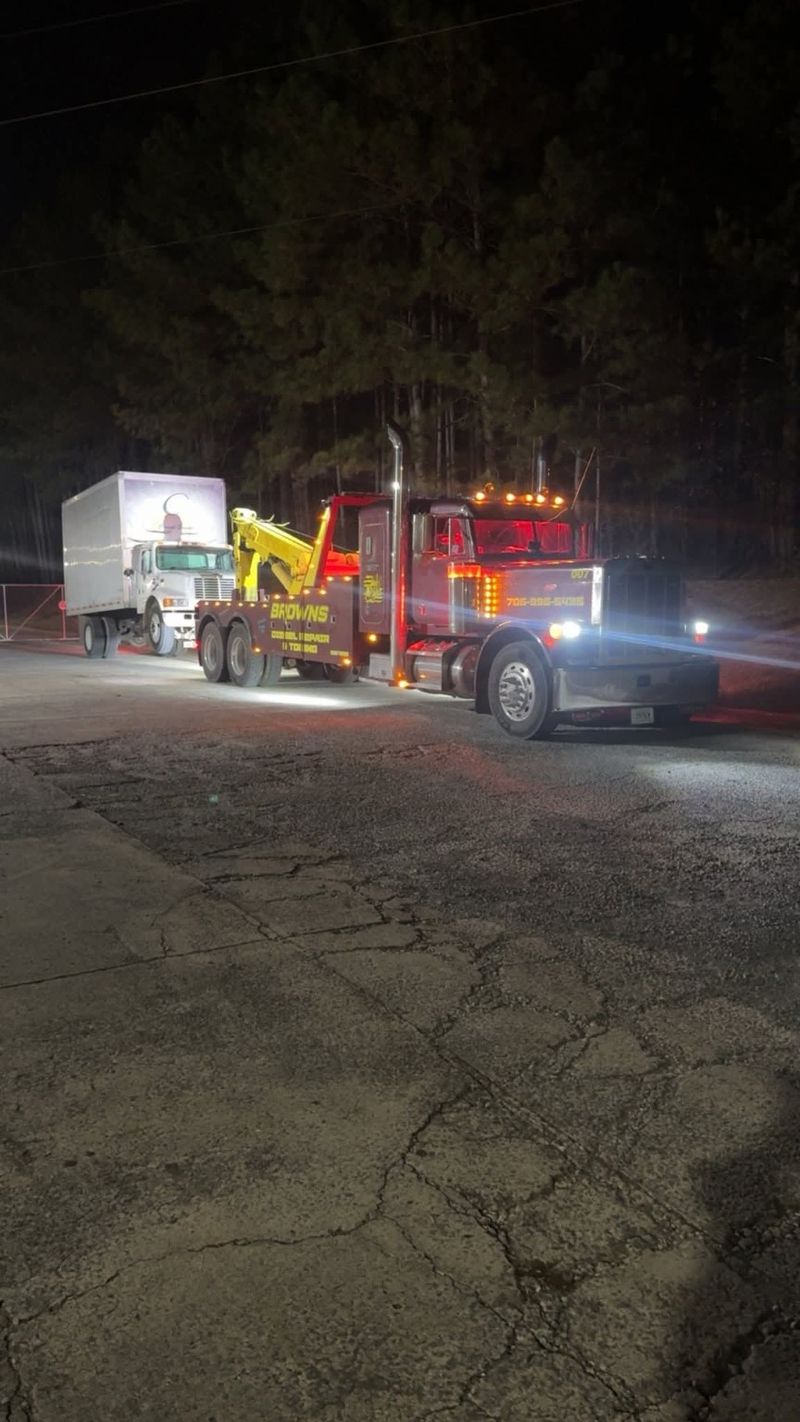
The wrecker with a box truck behind it at night. -
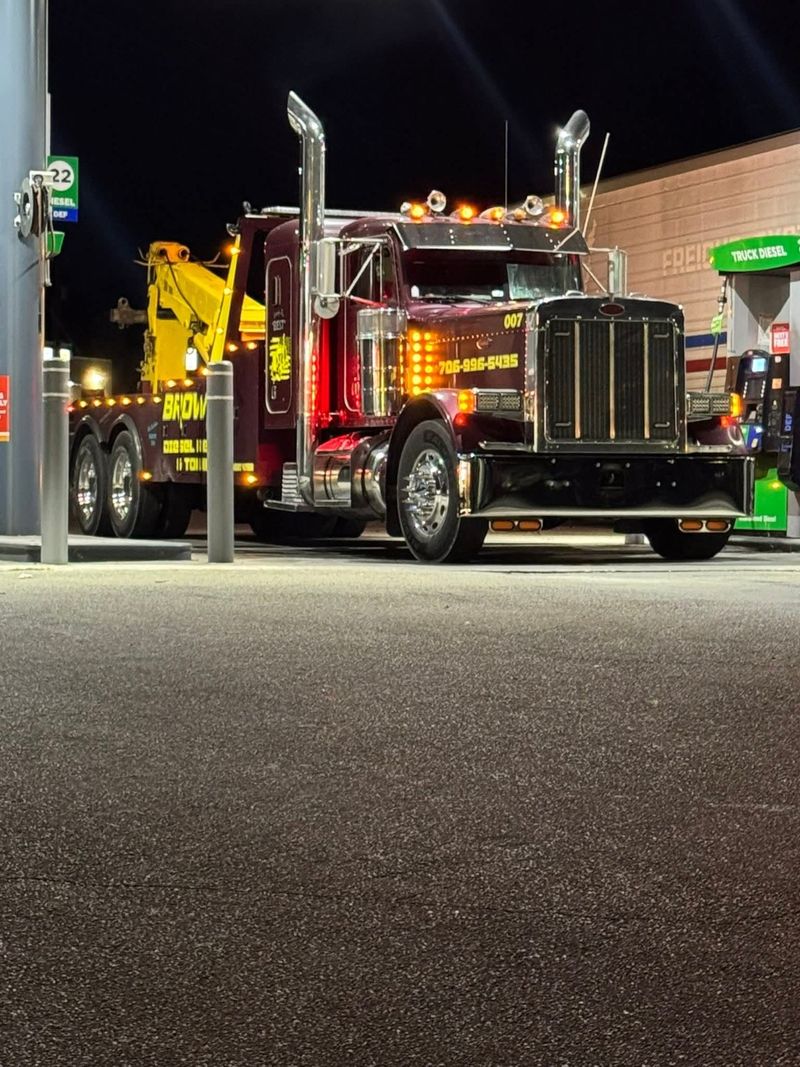
The wrecker beside the diesel pumps at night. -
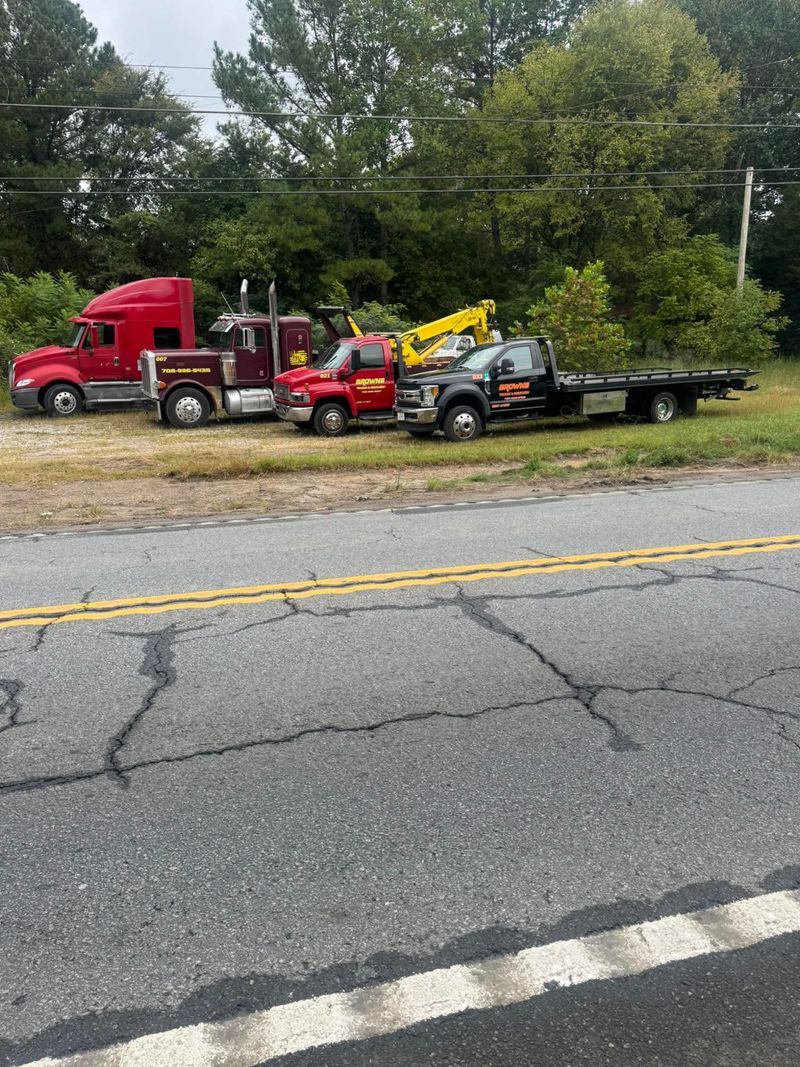
Trucks parked in a row, including the wrecker and the rollback.
Questions drivers ask
What should I have ready when I call?
Where you are (interstate, direction, last exit or mile marker), what you're driving, what happened, and a number that will answer. If you can see the mile marker sign, read it to dispatch; on I-75 in Georgia the exit numbers match the mile markers.
Is recovery the same as towing?
No. Towing moves a unit that is on its wheels. Recovery is getting it back onto its wheels or back onto the road first: winching out of a ditch, uprighting a rollover, straightening a jackknife. Recovery often ends with a tow; sometimes the truck can drive away.
Where is the shop?
11967 Highway 41, Tunnel Hill, GA 30755.
Do you come out at night?
Yes. Towing and roadside service run 24 hours a day, 7 days a week, on the same number. After hours, Chris answers the phone.
Day or night, one number.
Tell dispatch: interstate and direction, last exit or mile marker you passed, what you're driving, what happened.
Call 706-996-5435