Stuck, jackknifed, or off the road?
Recovery is the job before the tow: getting a unit back on its wheels or back on the pavement. Tell dispatch exactly how the truck sits and what's on it, and you'll get a straight answer about what can be done.
Situations we're called for
These are the recovery situations Brown's is called for. Each one is a different job, and the description you give dispatch decides what leaves the yard.
Situations drivers call about
- Soft shoulder: drive tires or trailer tandems off the pavement and sinking
- Mud and soft ground: a yard, a lot, or a shoulder after rain
- Ditch: one side of the unit down in a ditch or off an embankment
- Rollover: the unit on its side, with or without a load
- Jackknife: the tractor and trailer folded across the roadway or shoulder
- Snow and ice: a unit that slid off or can't get traction
What to describe when you call
The more exactly you describe how the unit sits, the better dispatch can size the job before anyone rolls.
- Which wheels are off the pavement, and how far
- Whether the unit is upright, leaning, or on its side
- What's on the trailer, roughly how heavy, and whether the load shifted
- The ground: mud, gravel, a ditch, a grade
- Whether the unit is blocking a lane, and whether anyone is hurt. If anyone is hurt or a lane is blocked, call 911 first.
After the recovery
Some units drive away once they're back on the pavement. Others need a tow, a roadside repair, or a load transfer before they move. The same number handles whichever it turns out to be.
If the load shifted
A shifted load can be set right, or moved to another trailer, before the unit continues. Describe what's on the trailer and what moved; dispatch decides what to send.
Coverage
Mobile units and wreckers cover approximately 50 miles from Tunnel Hill. Not sure we cover your location? Call and ask.
What to have ready when you call
- Interstate and direction, and the last exit or mile marker you passed, or the yard address
- How the unit sits: which wheels are off, upright or on its side
- What's on it and roughly what it weighs
- Whether a lane is blocked or anyone is hurt (call 911 first if so)
- A phone number that will answer
Photos
Each caption says only what the photo shows.
-
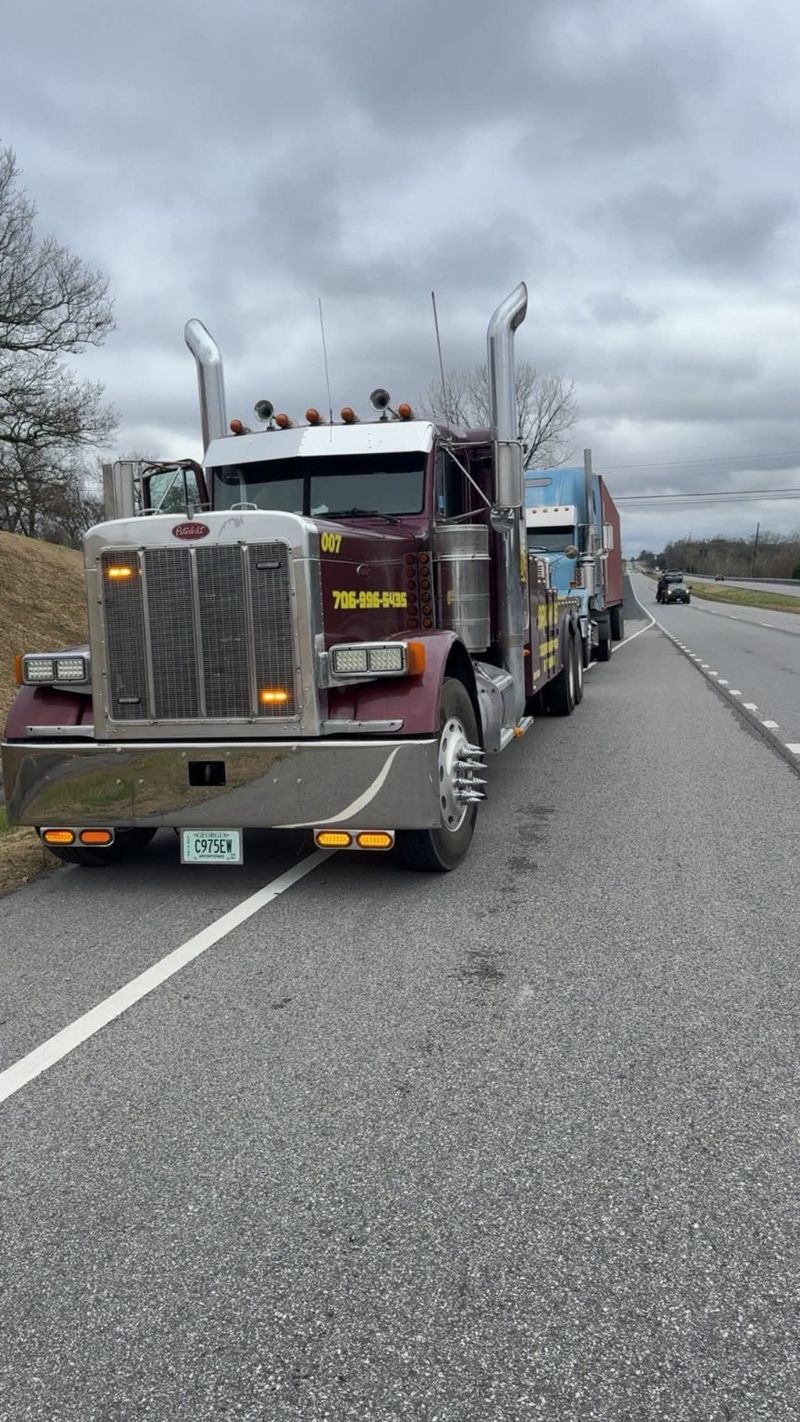
The heavy wrecker on the shoulder with a semi behind it. -
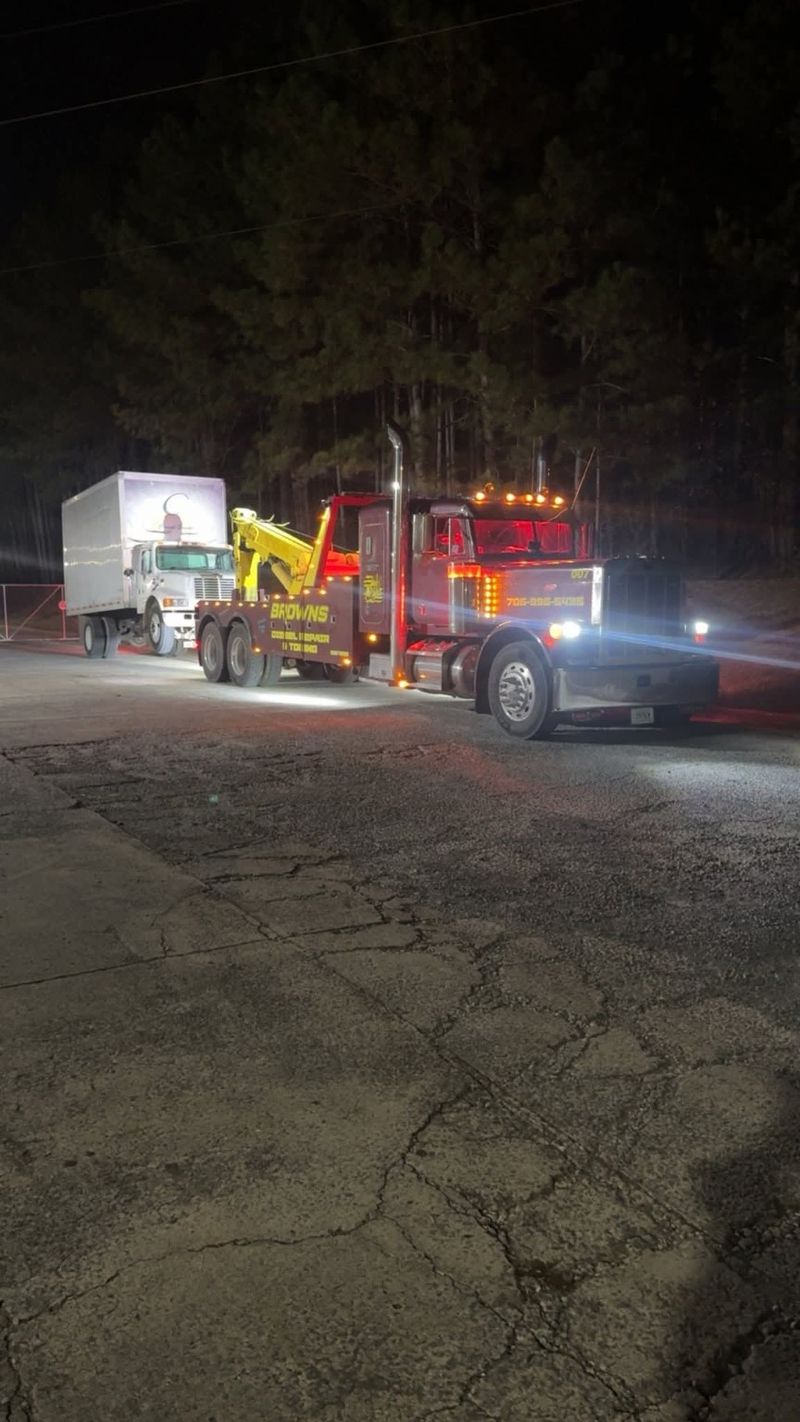
The wrecker with a box truck behind it at night.
Questions drivers ask
Is a winch-out the same as a tow?
No. A winch-out pulls a stuck unit back onto firm ground; a tow moves a unit that can't move under its own power. Many recoveries end with the truck driving away; some end with a tow. Dispatch works out which after you describe how the unit sits.
What should I have ready when I call?
Where you are, how the unit sits, what's on it, and a number that will answer. On I-75 in Georgia the exit numbers match the mile markers, so the last exit puts you within a mile.
Day or night, one number.
Tell dispatch: interstate and direction, last exit or mile marker you passed, what you're driving, what happened.
Call 706-996-5435